
unpopular opinions - wedding fairs and supermarkets are remarkably alike
wedding fairs don't build weddings. teams do.
it's 8pm. you're sat on the sofa with a cup of tea, scrolling instagram, pinterest and reddit looking for wedding inspiration.
you save a reel. then another. then another.
you love the flowers in one, but not the venue. you love the venue in another, but not the styling. you love the tablescape in a third, but you'd never choose those colours. before long, everything starts to blur together.
it's exhausting.
and perhaps the biggest misconception of all is believing that the luxury weddings you see online are representative of the average wedding budget. they aren't.
social media gives couples access to an endless stream of inspiration, but very little guidance. eventually, the pressure starts to build. your wedding is getting closer, there are decisions to make, and you need suppliers.
fast.
so naturally, you book tickets to a wedding fair.
as wedding professionals, we've all done them. we arrive early, unload the van, set up our stand, grab a coffee and walk around to see who's exhibiting.
there are offers…
discounts. free upgrades. tasters. brochures. competitions.
and whilst there is absolutely nothing wrong with any of that, the entire environment feels remarkably similar to a supermarket.
every supplier is trying to communicate their value. every supplier is trying to stand out. every supplier wants to leave with bookings.
for couples, it can feel productive. you've spoken to twenty suppliers and collected twenty brochures.
but here's the problem.
weddings aren't built like supermarkets. they're built like teams.
a supermarket allows you to fill a trolley with ingredients. whether those ingredients work together is entirely up to you.
wedding fairs often encourage a similar mindset.
photographer? tick. florist? tick. stylist? tick. stationery? tick.
before long, you've built a checklist of suppliers.
but a checklist isn't the same thing as a team.
when suppliers are booked entirely in isolation, there's always the possibility that they've never worked together before. they all have different ways of communicating, different processes and different ideas about how things should be done.
does that mean there will be problems?
of course not.
but it does mean you're relying on a group of strangers to come together and deliver one of the most important days of your life.
the best weddings i've ever worked on have one thing in common.
strong supplier relationships.
the photographer knows the planner. the florist knows the stylist. the stylist knows the venue.
everyone understands their role. everyone trusts one another. everyone is working towards the same outcome.
that's why one of the best ways to find suppliers is often through the suppliers you've already booked.
ask your photographer which florist they'd recommend.
ask your florist which stylist they'd recommend.
ask your stylist which photographer they'd recommend.
listen carefully to their answers.
not because referral fees are involved; they aren't.
but because recommendations are a reflection of reputation.
suppliers recommend people they trust.
people they've worked alongside. people whose standards align with their own. people who make the day run smoothly.
when suppliers align in goal, something interesting happens.
communication becomes easier.
collaboration becomes easier.
the experience becomes better for the couple.
the experience becomes better for the venue.
the experience becomes better for the suppliers.
everybody wins.
so if you're planning your wedding, don't just focus on collecting suppliers.
focus on building a team.
because a great wedding isn't a collection of suppliers.
it's a collection of people working together towards the same vision.
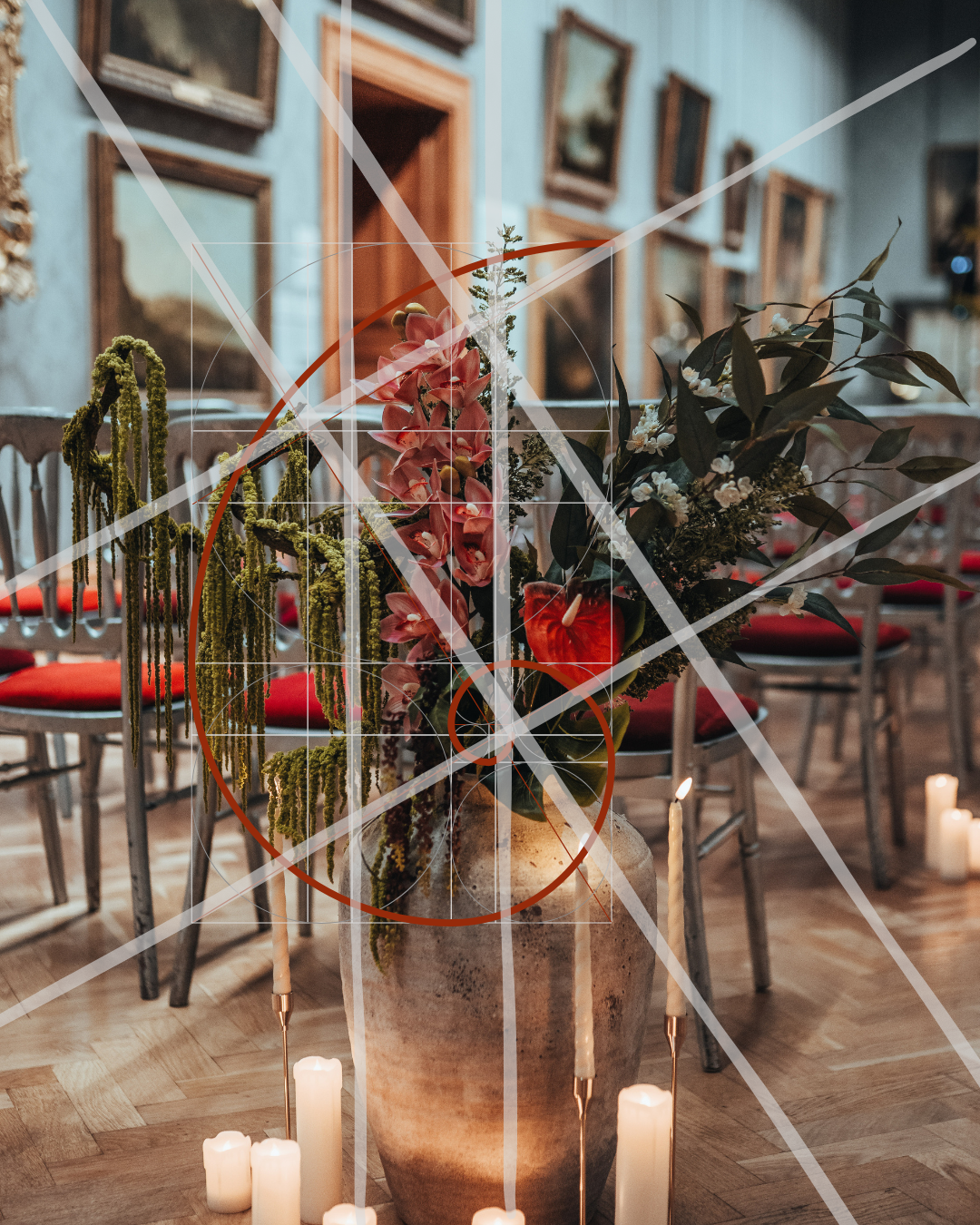
Fibonacci.
Design is rarely random. Beneath instinct and intuition lies structure; a hidden logic that governs balance, flow, and proportion.
In this piece, we explore how the Fibonacci sequence quietly informs floral composition, and why harmony matters more than prettiness.
The Sequence & Floral Design Principles
Design is rarely random.
Even when it looks organic, intuitive, or instinctive, there is usually a hidden structure beneath it; A logic that guides balance, flow, and proportion.
One of the oldest and most enduring of these structures is the Fibonacci sequence.
You see it in nature constantly.
In the spiral of a shell. In the unfurling of a fern. In the way petals arrange themselves around a flower’s centre. In the growth pattern of leaves along a stem.
It is a mathematical ratio that governs how things grow, expand, and feel right.
And it has quietly informed how we design floral compositions at Strawberry Maple for a long time, whether consciously or instinctively.
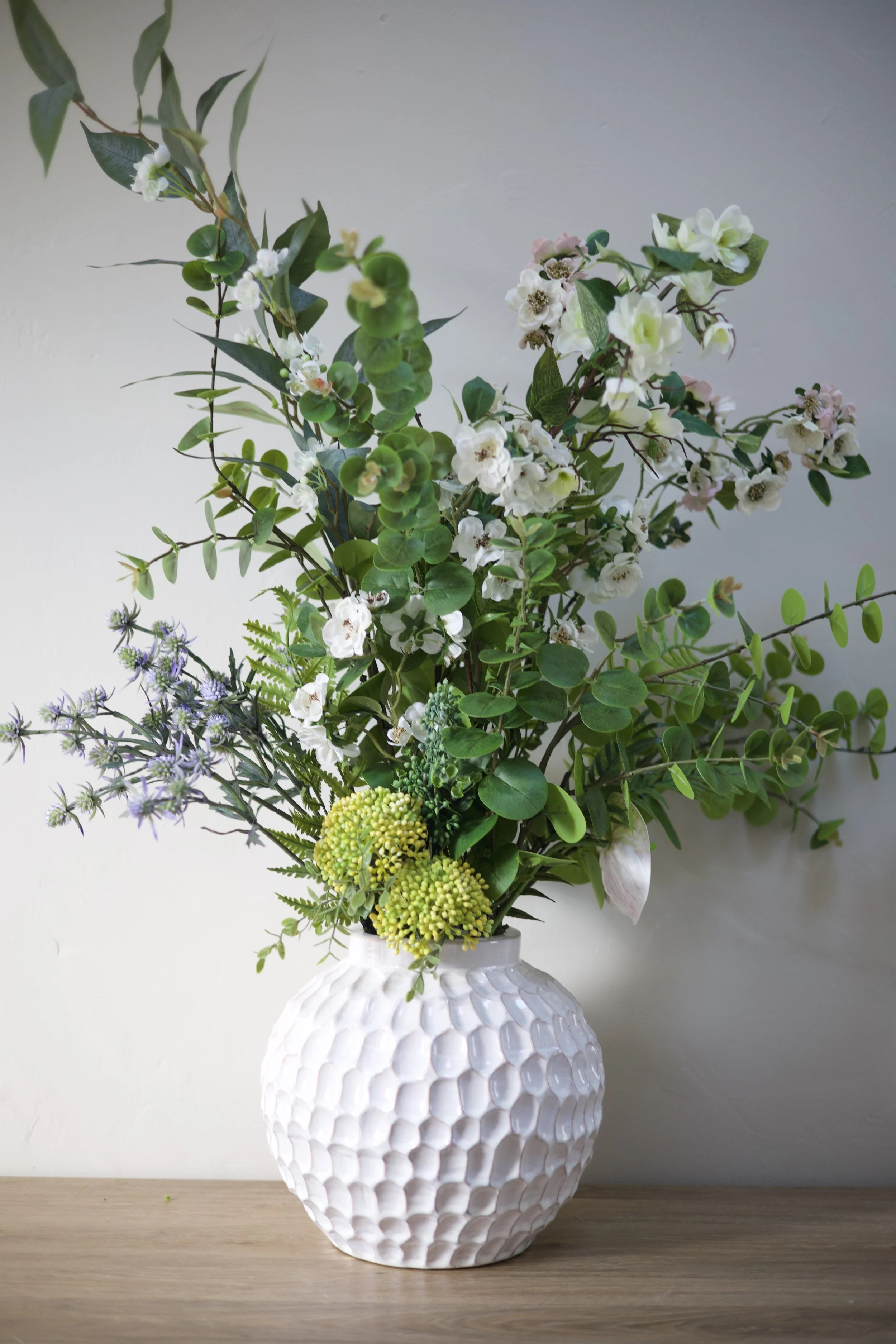
Why This Matters in Floral Design
Most floral work is built around symmetry, fullness, and central balance.
It is designed to look “nice” first.
We approach it differently.
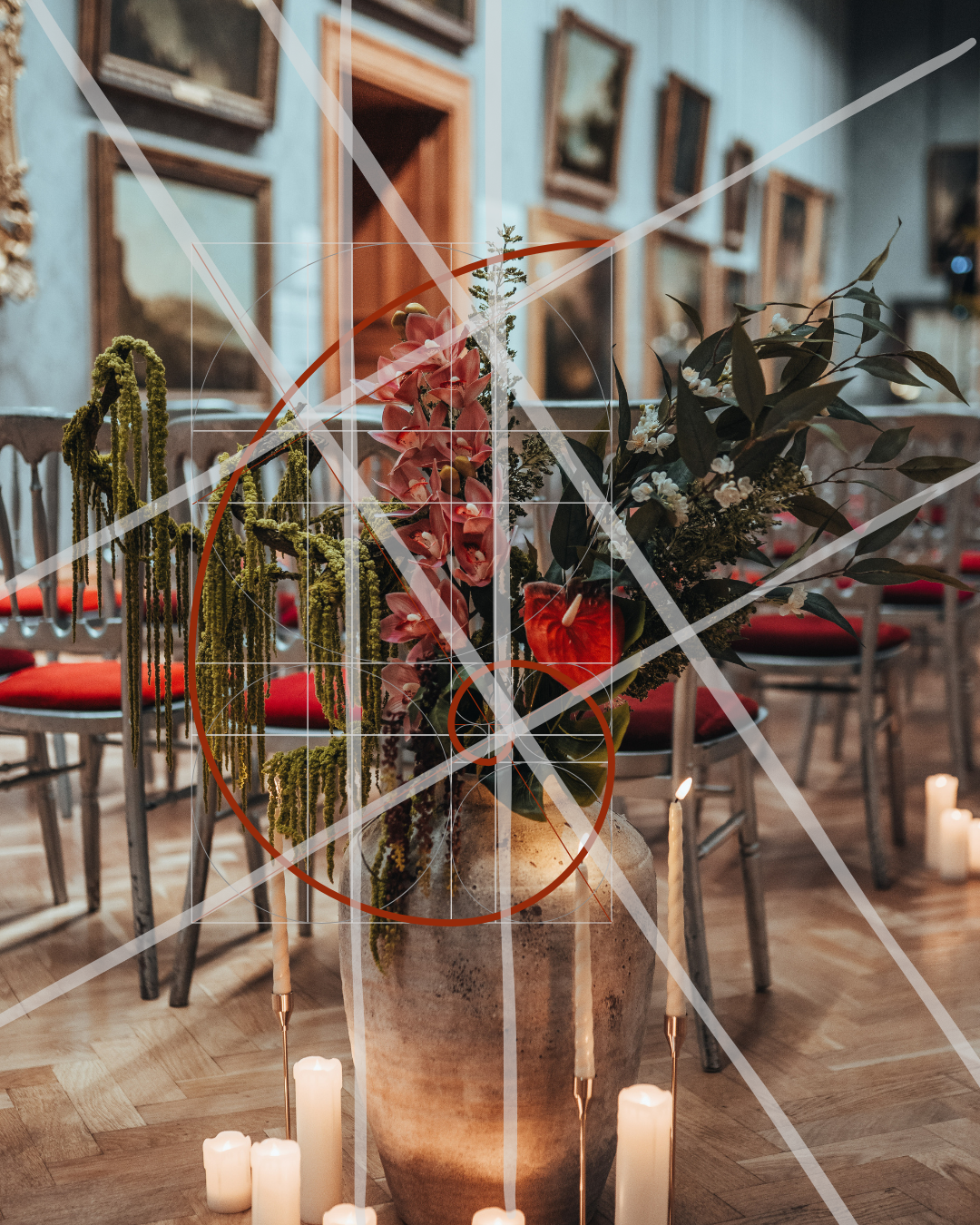
Floral design, for us, is spatial composition rather than ornament. It is about where mass is placed, how weight is distributed, where the eye lands first, and how it is guided through a piece.
The Fibonacci sequence provides a quiet framework for that.
Not as a formula. Not as a gimmick. But as a proportional logic that helps compositions feel intentional rather than accidental.
When a focal mass is placed slightly off-centre — not randomly, but deliberately — the piece gains tension.
When height follows an expanding curve rather than a straight vertical axis, the piece gains movement.
When negative space mirrors the outer expansion of the spiral, the composition breathes instead of collapsing inward.
The result is a design that feels balanced without being obvious.
You don’t see the maths. You feel the harmony.
An Example in Practice
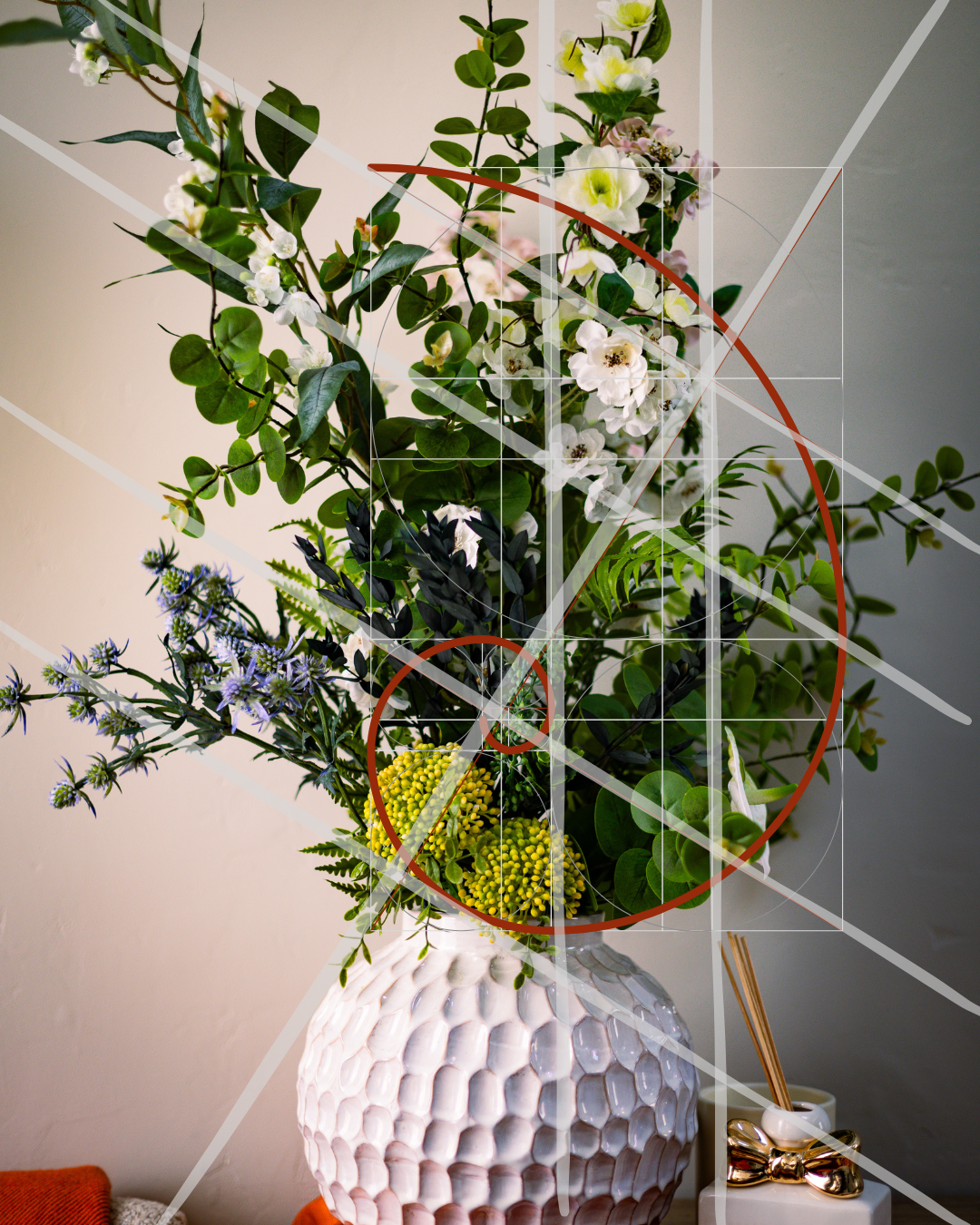
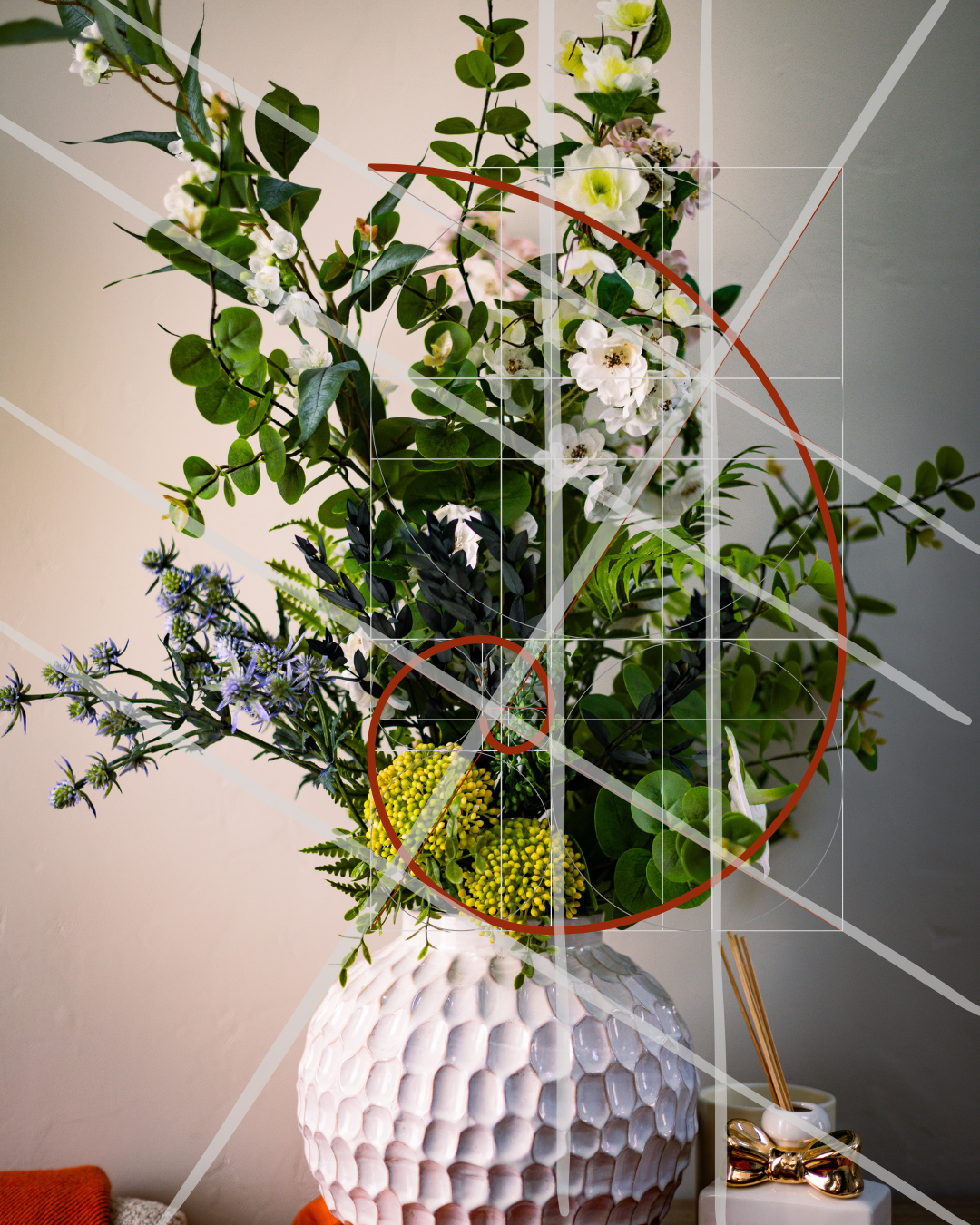
In the floral composition pictured here, the densest visual mass; A concentrated cluster of yellow texture and dark foliage, sits at the nucleus of the spiral.
From that anchor point, the design ascends along an expanding curve:
heavier forms near the base
sharper disruptions offset laterally
softer white blooms releasing tension at the top
lighter green stems extending the visual exit
Negative space on the left-hand side is not empty. It is deliberate.
It creates lateral tension against the vertical lift of the stems. It allows the thistle to interrupt the composition without overcrowding it. It prevents the design from collapsing inward.
When the Fibonacci spiral is overlaid onto the piece, it doesn’t distort the design. It confirms it.
That is the difference between structure revealing intelligence, and structure being forced for effect.
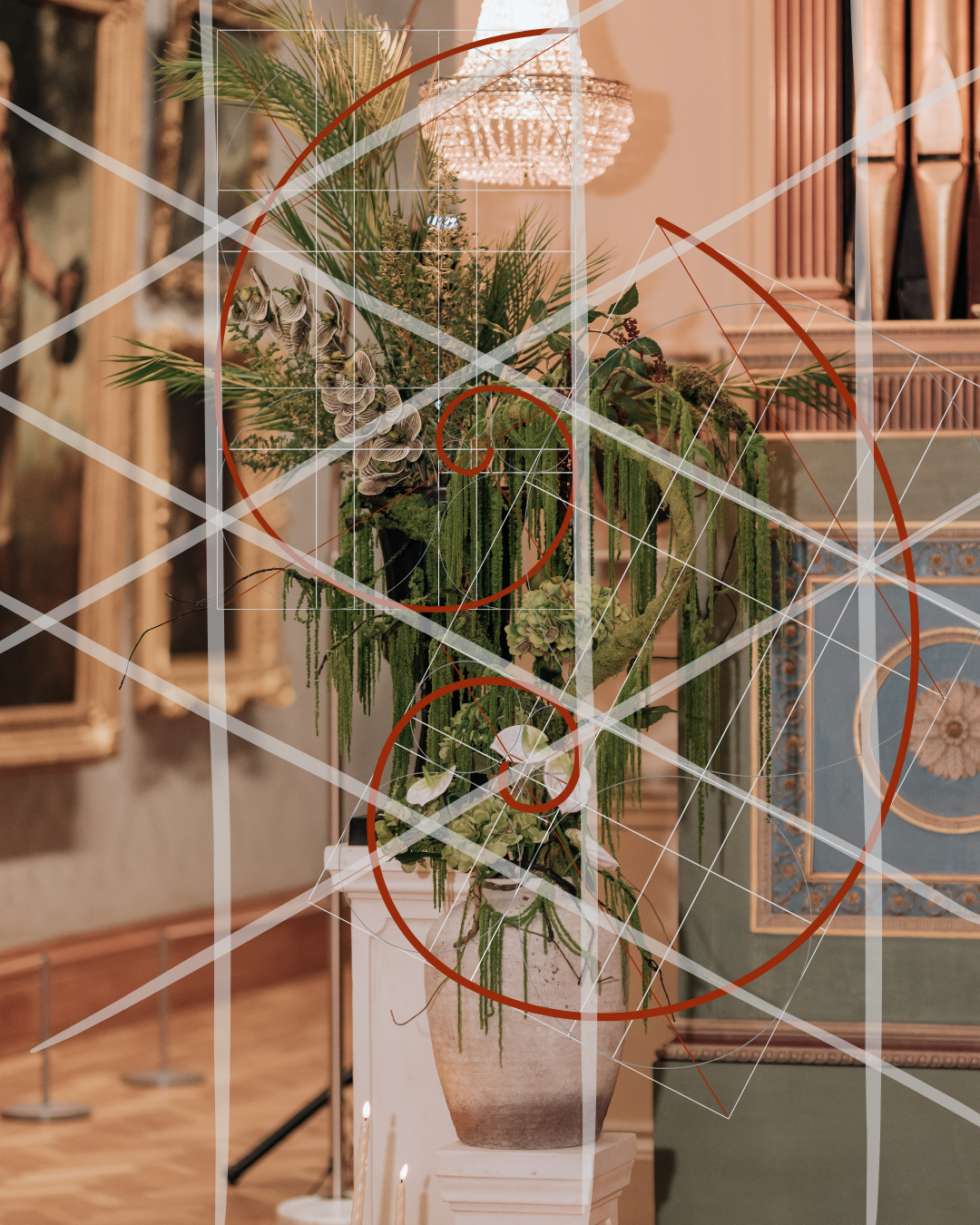
This way of thinking doesn’t just apply to a single arrangement.
It governs how we design rooms, installations, and environments.
When proportion is controlled:
spaces feel calmer
focal moments feel inevitable
restraint feels intentional rather than sparse
excess feels unnecessary rather than tempting
People often say a room “just feels right” without being able to explain why.
This is why.
It is not decoration.
It is spatial authorship.