
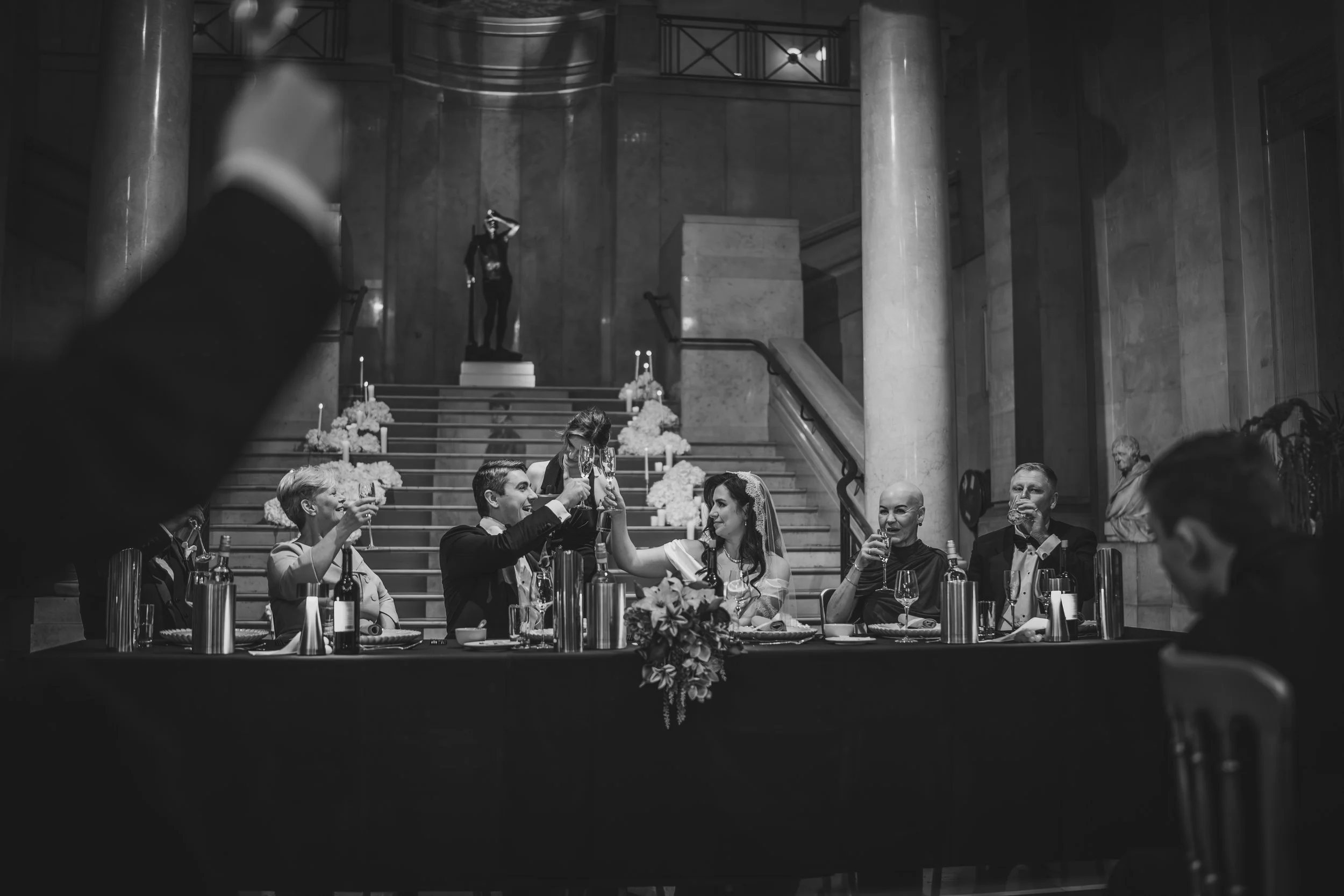
editorial wedding styling
what is editorial wedding styling?
editorial wedding styling is not a look. it’s a discipline.
it’s defined by placement, proportion, and material; how each element is introduced, and how it holds within a space.
the focus is not on filling a room, but on composing it.
what is added, what is withheld, and how those decisions shape the atmosphere.
this approach to wedding styling and design moves beyond decoration, forming part of a broader, installation-led way of working across weddings throughout the UK.
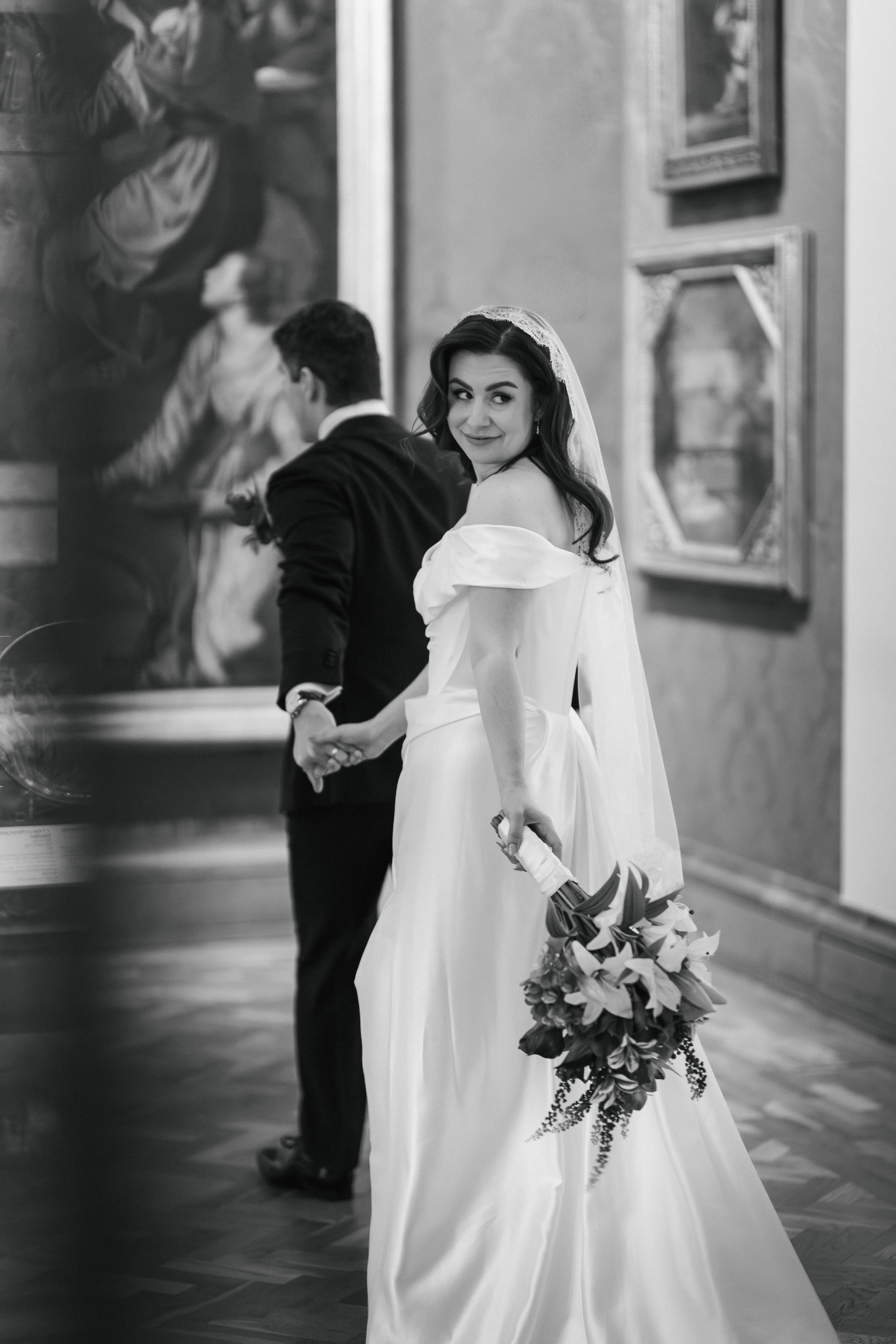
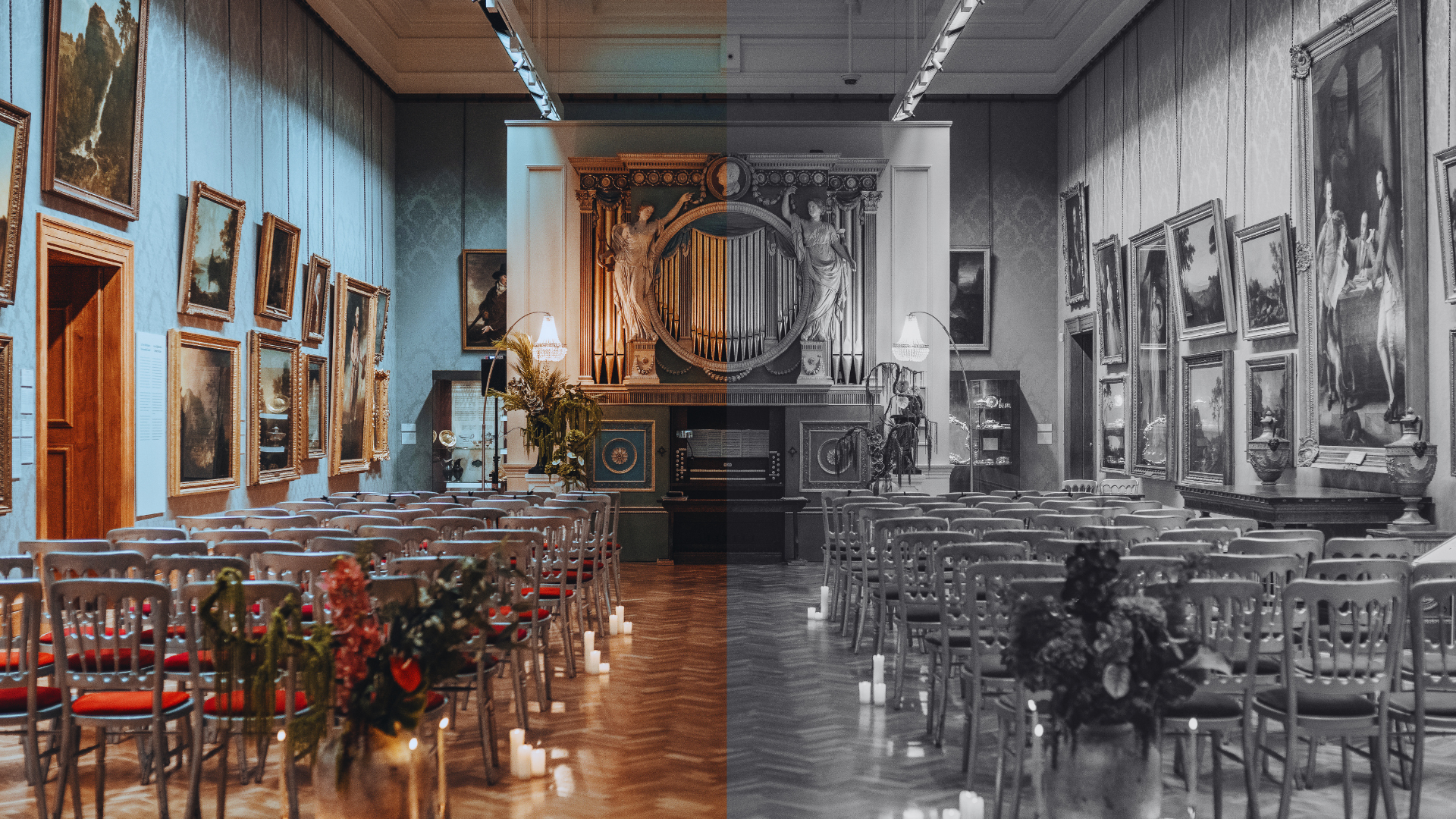
editorial
philosophy
at its core, editorial wedding styling is concerned with how a space is read and experienced. every decision; from material selection through to placement contributes to how the environment holds together as a whole.
this requires a level of restraint. not every surface needs to be filled, and not every idea needs to be realised.
the strength of a composition often comes from what is left out, allowing individual elements to carry more weight within the space.
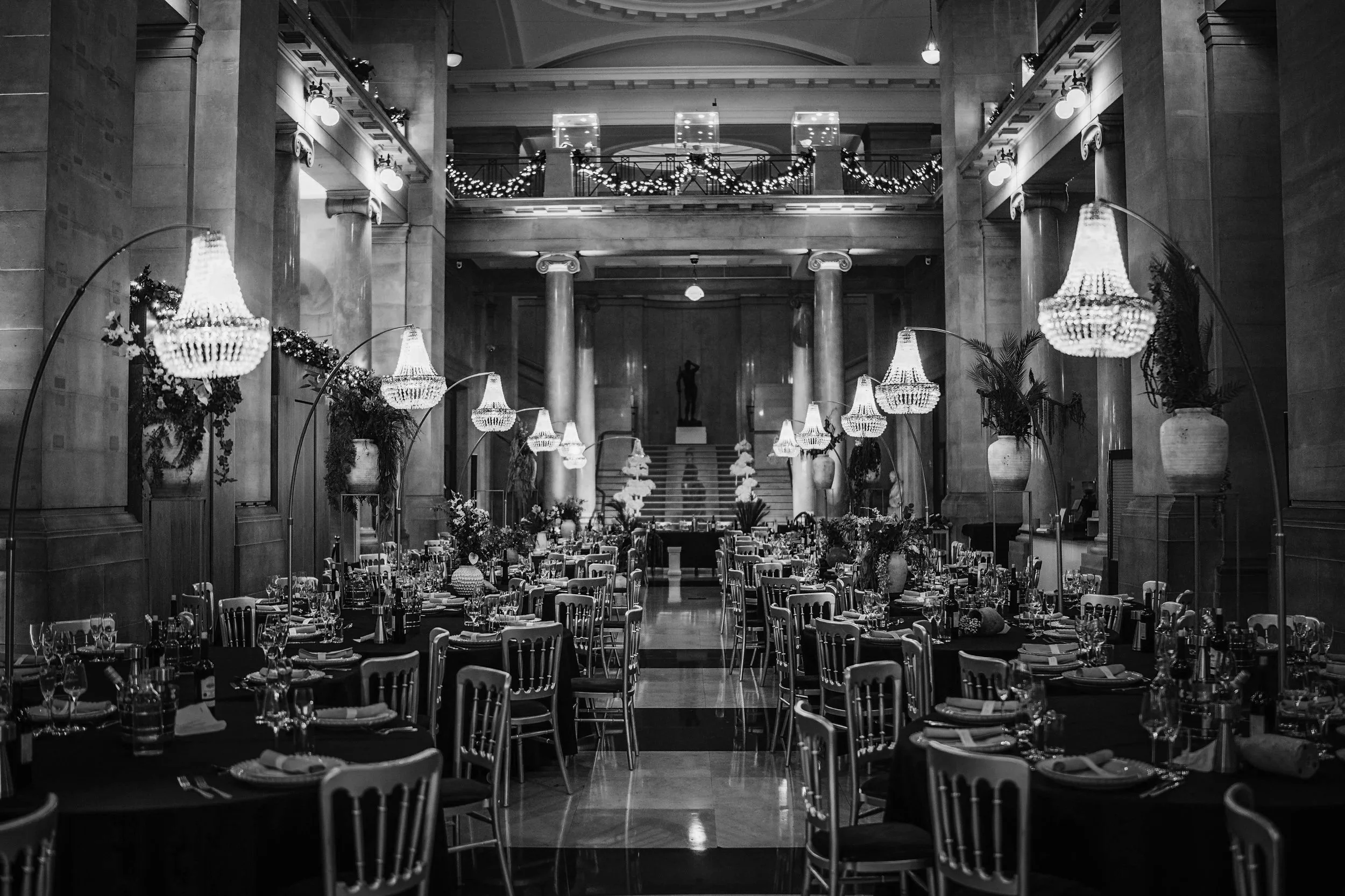
scale plays a defining role in this approach to wedding design. larger installations are not introduced for impact alone, but to establish structure to anchor a room, guide movement, and create a sense of continuity throughout the day.
material is treated with equal consideration. texture, tone, and form are not layered for decoration, but selected for how they interact with light, architecture, and one another. this is where wedding styling begins to move into a more deliberate design process, rather than a series of visual additions.
across both weddings and wider installation work, the outcome is shaped by clarity. each element has a purpose, and the space is allowed to breathe as a result.
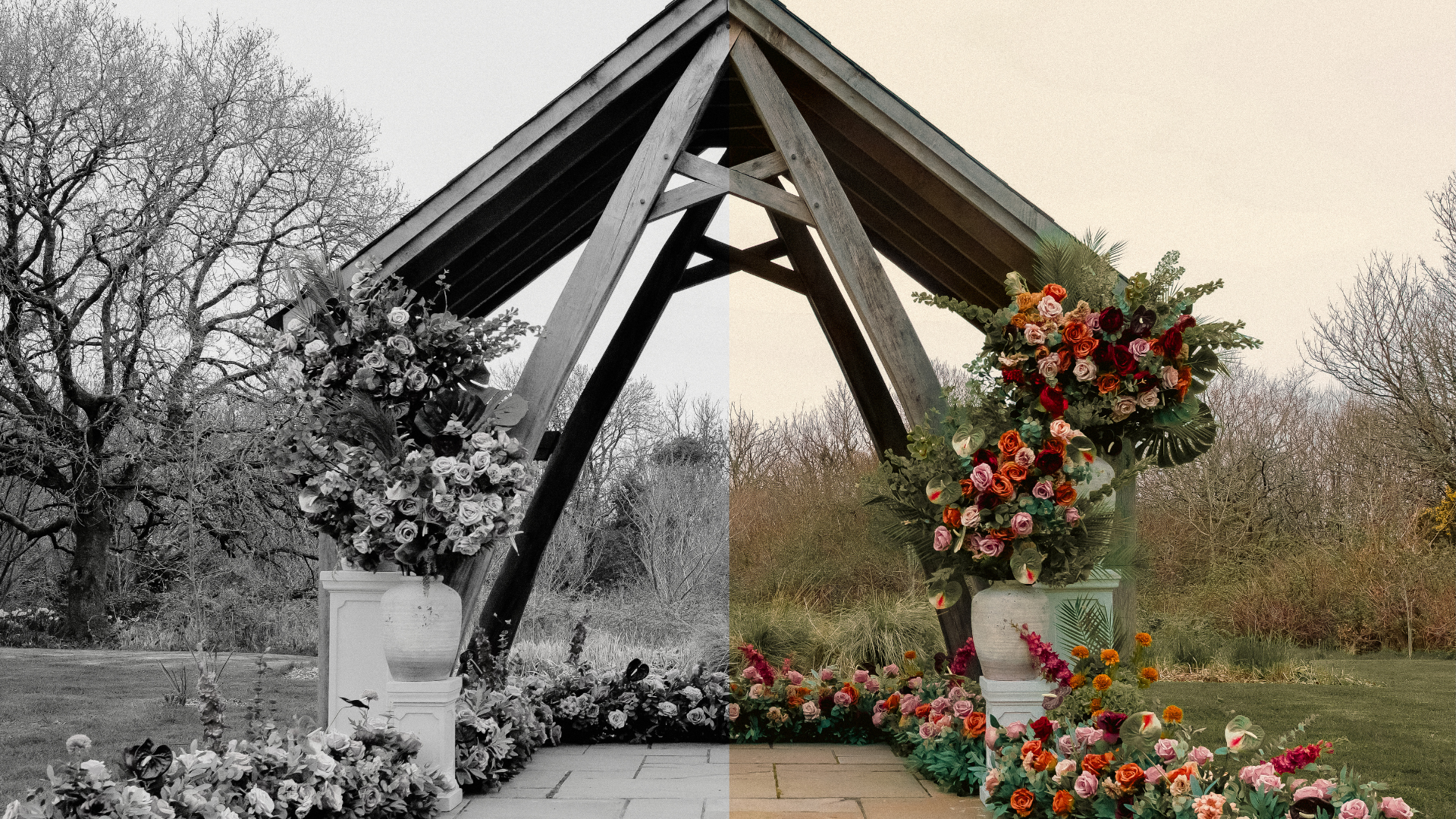
application
this approach to editorial wedding styling is applied differently across each part of the day, but the underlying principles remain consistent.
within ceremony spaces, the focus is on structure and clarity. aisle work, entrance framing, and focal points are positioned to sit correctly within the room, allowing the space to hold its own without unnecessary layering.
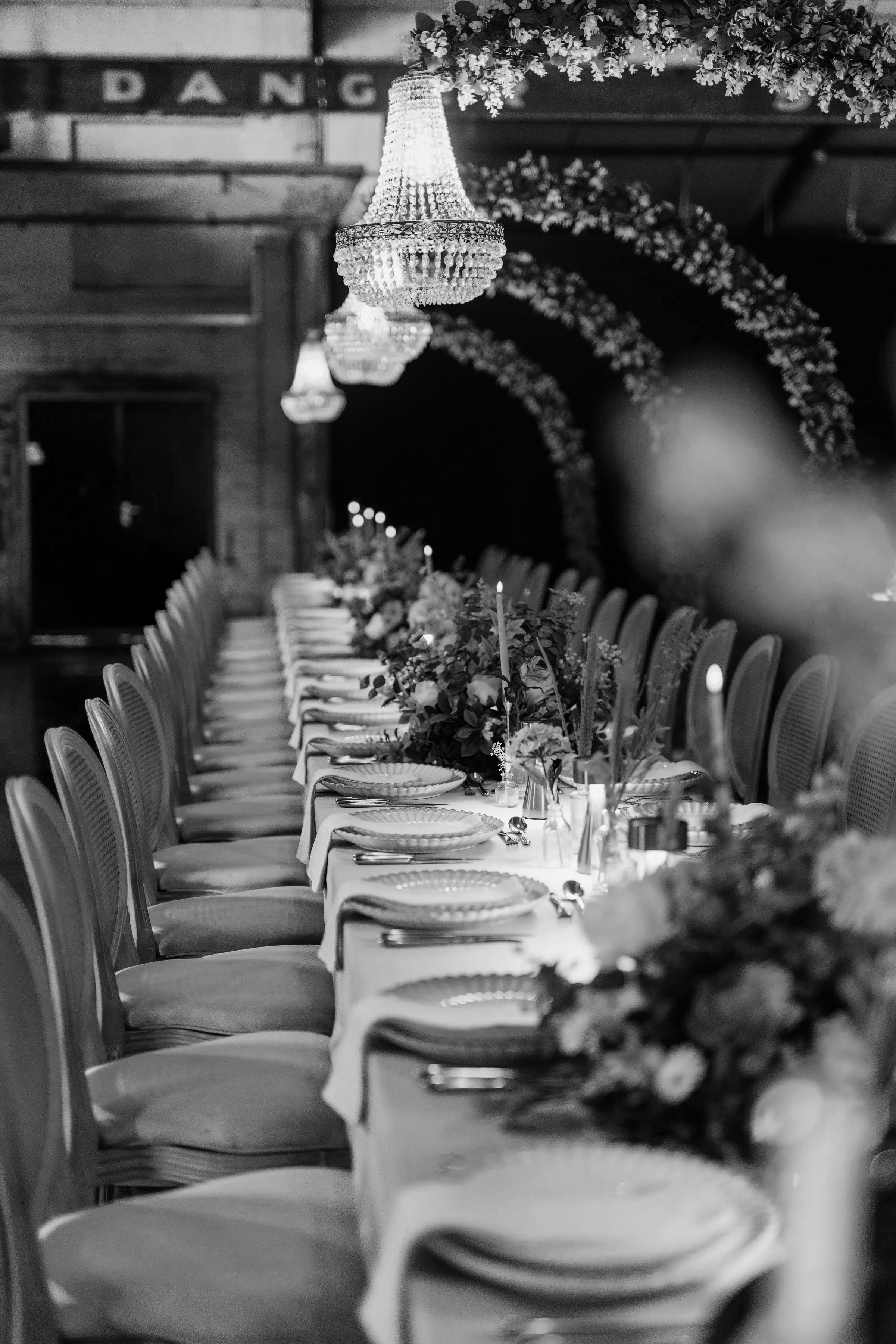
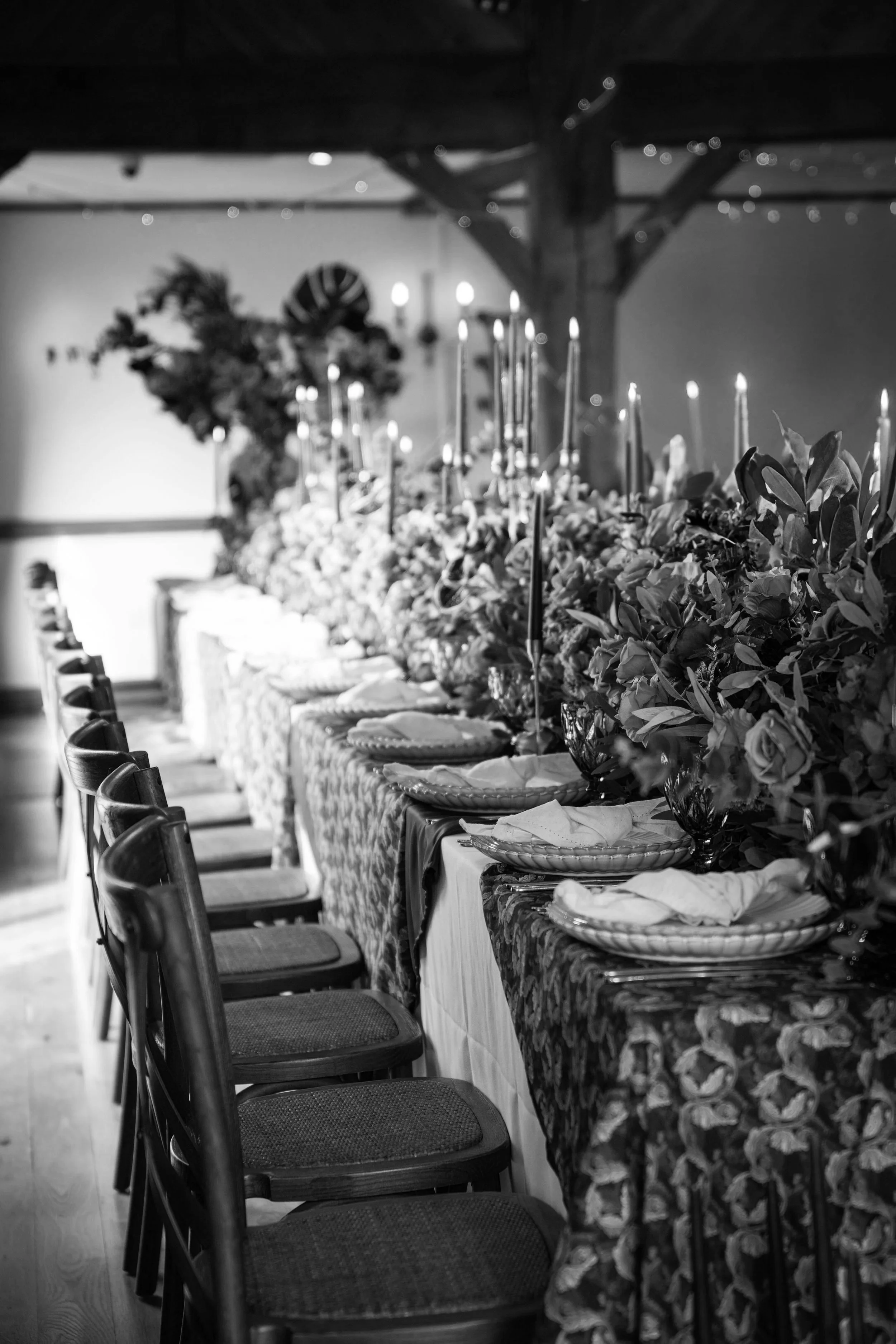
table design shifts the attention toward repetition and composition. each setting is considered as part of a wider arrangement, where material, proportion, and spacing work together to create a cohesive visual rhythm across the room.
larger installations introduce a different layer entirely. these elements establish presence, define movement, and anchor the space, particularly within reception environments where scale becomes more important.
across all of these applications, the intention remains the same; to create environments that feel resolved, rather than assembled.
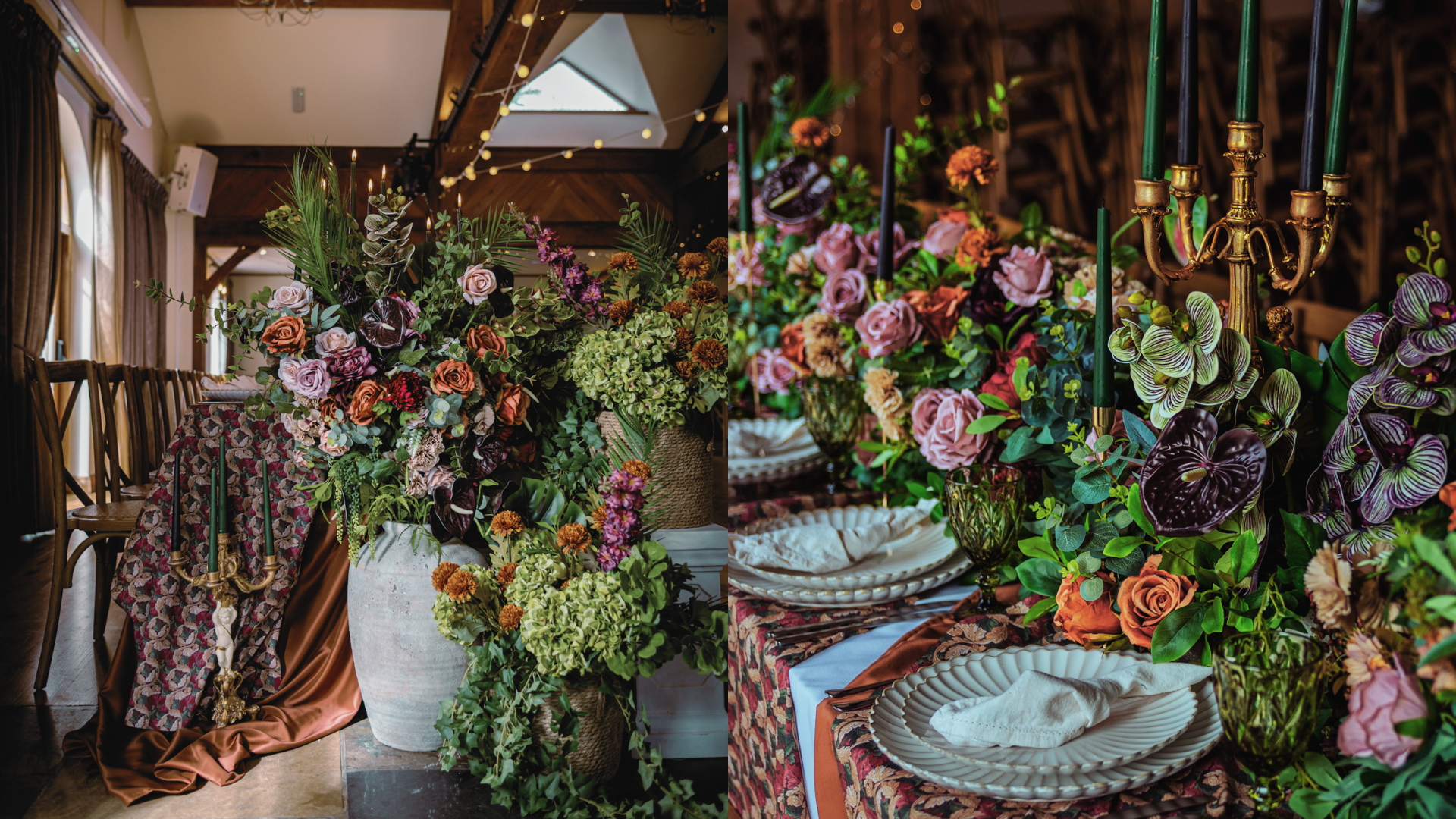
scale
some environments require a broader approach.
as scale increases, styling begins to operate differently; not just as a series of details, but as a structured system across the space.
larger installations are used to establish presence and guide movement, ensuring the room holds together as a whole rather than in isolated moments.
this is where placement, proportion, and clarity become even more critical, particularly within venues that allow for greater volume and openness.
editorial wedding styling is ultimately about control of space, of material, and of how each element is introduced.
when approached in this way, the result is not simply a styled environment, but one that feels considered, balanced, and complete.
for weddings and installations where this approach feels aligned, further information can be found within our brand environment and design philosophy pages, or enquiries can be made via our enquiry page.
weddings featured - julia & conrad
commercial brand environment featured - cygnet gin
studies featured - study 1 : controlled opulence
photographer credits